Embark on an unforgettable journey along Madeira’s breathtaking west coast, where towering cliffs, charming seaside villages, lush green valleys, and centuries-old traditions come together to reveal the island’s most authentic beauty.
This remarkable route offers the perfect blend of dramatic landscapes, cultural heritage, and local charm, taking you through some of Madeira’s most iconic and inspiring places. From the colourful fishing village of Câmara de Lobos to the volcanic natural pools of Porto Moniz, passing through banana plantations, mountain viewpoints, Laurissilva forest scenery, and coastal roads carved into the cliffs, every stop offers a new and memorable perspective of the island.
More than just a sightseeing tour, this experience is a journey through Madeira’s soul, a day filled with discovery, breathtaking views, authentic stories, and unforgettable moments.
DESCRIPTION OF ALL STOPS
Câmara de Lobos: Just 5 km from Funchal, our first stop is the traditional fishing village of Câmara de Lobos. With its colourful boats, charming bay, and authentic local atmosphere, this picturesque village has inspired many artists over the years, including Winston Churchill, who famously painted it during his stay in Madeira.
Ribeira Brava: Following the scenic south-west coastline, we arrive in the charming village of Ribeira Brava. Here, you can admire its beautiful 15th-century church and enjoy the relaxed atmosphere of this coastal village, surrounded by mountains and the Atlantic Ocean.
Madalena do Mar: A peaceful and scenic stop surrounded by lush banana plantations. This area offers a wonderful glimpse into one of Madeira’s most traditional agricultural landscapes, where banana farming remains an important part of local life.
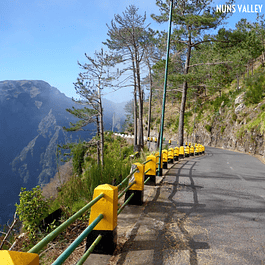
Fonte do Bispo: Climbing to an altitude of around 1,300 / 1,500 metres, we reach the vast plateau of Paúl da Serra, one of Madeira’s most unique landscapes. This area is the starting point for several famous levada walks through the Laurissilva Forest, a UNESCO World Heritage Site. We will stop at the Fonte do Bispo viewpoint to enjoy its wide-open views and peaceful mountain scenery.
Porto Moniz: One of the highlights of the day, Porto Moniz is famous for its spectacular volcanic natural swimming pools, formed by ancient lava flows and filled by the Atlantic Ocean. As we descend towards the town, you will enjoy breathtaking panoramic views over the coastline. Weather permitting, bring your swimsuit for a refreshing swim. Lunch and free time are included here, with approximately 1h30 to 2 hours to relax and explore.
Seixal: A short but unforgettable stop along Madeira’s dramatic north coast. Here, we admire the impressive cliffs, lush green mountains, and beautiful waterfalls, including the iconic “Bridal Veil” cascade. This is one of the most photogenic areas of the island, where nature’s beauty is truly on display.
São Vicente: We continue to the picturesque village of São Vicente, nestled in a beautiful green valley between the mountains and the sea. Here, you can visit its lovely 17th-century church and enjoy the peaceful atmosphere before we begin our journey back towards the south of the island.
Cabo Girão: Our adventure ends at Cabo Girão, one of Madeira’s most impressive viewpoints. Standing approximately 580 metres above sea level, its famous glass-floored balcony offers breathtaking panoramic views over the Atlantic Ocean, Funchal, Câmara de Lobos, and the terraced hillsides below, a truly memorable way to end the day.
Important Notice Regarding Pick-ups and TransportPlease note that pick-ups are available within Funchal city centre and the main tourist hotel area
Some areas, including pedestrian zones, historic streets in Funchal, and locations with restricted access for the type of transport we use, may not be suitable for direct pick-up
If your accommodation is located outside our pick-up area or in a restricted-access zone, please provide us with your full accommodation address so that we can direct you to the nearest available meeting point in Funchal
Our activities are usually operated in groups of around 16 participants. However, during peak seasons, the type of transport may be adjusted and the number of participants per group may increase, depending on availability and logistical requirements




 Sale
Sale


